


transportation

  • Breaking Barriers and Building Better

    Breaking Barriers and Building Better

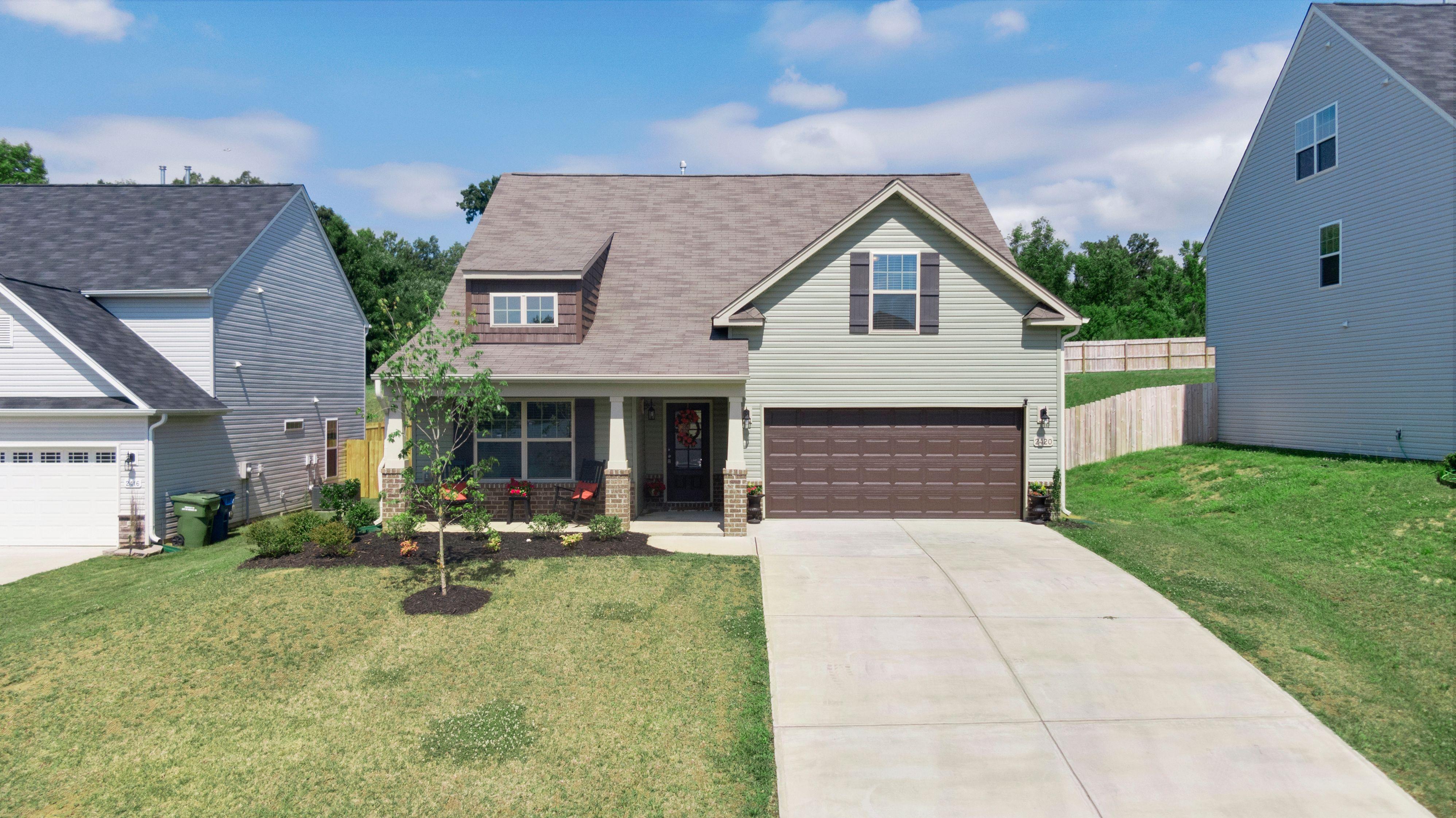
    Announced on May 31, 2026, Berkshire Hathaway will acquire homebuilding giant Taylor Morrison for $8.5 billion. The all-cash transaction values Taylor Morrison at $72.50 per common share.

    Taylor Morrison is one of the leading homebuilders and developers in the U.S. Taylor Morrison’s Chairman and CEO, Sheryl Palmer drove the company to its nationwide strength and growth, going public in 2013 and currently building in 21 markets across 12 states.  Under her tenure, Taylor Morrison’s leadership team boasts a unique point of view: 50% of senior leadership roles are occupied by women, over four times the industry standard. Of their women working in construction, 38% are Millennials or Gen Z. 

    Palmer is not going anywhere following this acquisition. Berkshire Hathaway announced that the Taylor Morrison team will continue with its existing management, including Palmer. While the company is going private, Palmer was the only woman to lead a publicly traded homebuilder for nearly two decades. 

    “Over the last 13 years as a public company, we built a track record of strategic growth, expanding our geographic footprint, integrating acquisitions with discipline and deepening our competitive strengths across procurement, brand and customer experience,” said Palmer. “Berkshire Hathaway’s long-term orientation is uniquely well-suited to the multi-year investment cycle of homebuilding and this combination will allow us to scale the Taylor Morrison platform in ways that would not be possible as a standalone company.”

    Acquisition Execution 

    This is the first major move from Berkshire Hathaway’s new CEO Greg Abel, who assumed the role in January. The move builds on Berkshire’s existing footprint in the sector; the company already owns Clayton Homes, the modern manufactured homebuilder, which it acquired in 2003 for $1.7 billion. 

    There are indications of a consolidation between the two homebuilders. Combining Taylor Morrison’s 12,997 closings and Clayton Properties’ 9,953 closings in 2025 would create the fourth largest homebuilder in the United States.

    “We are excited to welcome Taylor Morrison into Berkshire’s portfolio, reflecting our long-standing commitment to housing, exemplified by Clayton Homes and our other building products businesses,” said Abel. “Over time, we expect to unify our site-built homebuilding operations into a combined platform enabling us to deliver the dream of homeownership to more Americans.”

    What does Taylor Morrison bring to the table that would differentiate Berkshire’s offerings? A reputation of consumer trust built by leadership. 

    Role Models in Motion 

    Taylor Morrison exemplifies sustained leadership opportunities for women throughout the company. Andrea Murphy, Senior Director of Sales Implementation, found herself in the industry as her early passion naturally evolved into a career, where she could help others create spaces that reflect how they live. 

    “Taylor Morrison has allowed me to leverage my experience while also providing opportunities to stretch my skill set,” said Murphy.

    Christie Ferro, Senior Vice President, Financial Services at Taylor Morrison Home Funding, Inc., knew she was in the right place 24 years ago. She points out that at Taylor Morrison, both the mortgage president and CEO are women. 

    “It mattered deeply to work in an environment where women are supported, visible and trusted to lead,” said Ferro. “Having strong female role models at the top reinforced that there was a path forward and that my voice and contributions belonged at the table.”

    The duo of Murphy and Ferro are on the front lines when understanding buyer behavior. Together they host National Homebuying Webinars addressing over 700 prospective buyers. 

    Ferro notes by shifting homebuyer education and financing conversations from reactive to proactive, it reduces surprises and allows for the sales experience to be informative rather than overwhelming. For these events, Murphy emphasizes the importance of building trust and confidence between prospective buyers before they walk through the door. 

    Communities Coast to Coast

    As Taylor Morrison averages 339 active selling communities at any given time, its offerings across the country suit different buyer needs and demographics. 

    Aurora at Luna Park in Irvine, Calif., features two‑story layouts with up to five-bedrooms, four-bathrooms and up to 3,320 square feet of living space. The community is applauded for its central location to major employment centers, healthcare and cultural hubs. 

    In Phoenix, Ariz., at Taylor Morrison’s master-planned community, Verdin, the one-story Alder floor plan includes three-bedrooms, three-and-a-half bathrooms, a three-car garage with up to 3,527 square feet of open-concept living space. This community prioritizes space for function and entertainment. 

    The Travisso Naples Collection, Palisade, in Austin, Texas, offers 4,640 square feet with five-bedrooms and five-and-a-half-bathrooms. This community prides itself on the marriage of luxury, craftsmanship and a desirable location. 

    In Indianapolis, Ind., the Reserve community has up to three-bedrooms, two-bathrooms and a two-car garage with 2,056 feet of open-concept living space. The traditional-style home markets a community-centric feeling to clients. 

    Every Taylor Morrison community is uniquely tailored to mirror the lifestyle and identity of the region it serves. The story behind the $8.5 billion deal does not point to just Taylor Morrison’s bottom line: it stands as a validation of the tangible culture Palmer built from the ground up. 

    By Sofia Feeney. She is the Editor at Builder and Developer and can be reached at sofia@builder.media

    This story is also featured in B&D July, read the print version.

  • Building a Name of Your Own

    Building a Name of Your Own

    In the homebuilding industry, reputation is often a multi-generational asset. For those of us who enter the field carrying a well-known last name, there is a unique set of challenges. While a name can open a door, it can also create an immediate, unspoken skepticism. When I began my career at WHA, my father’s architecture firm, I arrived with a reputation that was not mine. I was frequently met with comments like, “Wow, I know your dad!” often followed by the occasional, unmistakable eyeroll that suggested I was simply a passenger on a path already paved for me. I realized quickly that if I wanted to be more than a “legacy hire,” I had to establish my own credibility through a relentless commitment to being present.

    Trust in this industry is not inherited; it is built through repeated, consistent visibility. Early on, I made a conscious choice to say yes to every opportunity, joining councils and volunteering for committees even when the immediate benefit wasn’t clear. I knew that to move past the nepotism stigma, I had to be the hardest worker in the room, both within the industry and at WHA. I vividly remember showing up to my first few committee meetings and not saying a single word. I was unfamiliar with the nuances of the group and felt like an outsider. 

    Early on, I felt an intense pressure to fit a specific mold, trying to mimic the traditional leadership styles I saw around me. I thought to be taken seriously, I had to fit a specific mold but the harder I tried to play that part, the more I felt like an awkward networking contact rather than a true professional partner. Once I decided to stop performing and start trusting my own voice, I felt an immediate shift both internally and externally. This shift helped me grow in confidence and allowed me to develop genuine relationships and contacts that were based on mutual respect.

    However, I kept showing up. I started bringing ideas to the table and immersed myself in the work. By my second year on that committee, I received a call asking me to hold an official leadership position. My first reaction was a shocked, “Me?” but I took the leap. Fast forward a few years, I eventually became the Co-Chair and then the Chair of that very committee. This taught me that you cannot wait for an invitation to lead; you have to show up until your presence is expected and your contributions are indispensable.

    While I was establishing myself externally, I was also navigating the internal challenge of modernizing our firm’s approach to growth. Coming in with a digital marketing background, I saw immense value in using new tools to reinforce our brand and maintain our relevance. 

    At the time, our industry was deeply rooted in years of tradition and things like blogging or social media were often viewed as unnecessary distractions rather than strategic assets, especially for an architecture firm. For a while, it felt like I was advocating for a shift that few believed was needed.

    The perspective changed through a proven result that got their attention. We secured a major job that traced back directly to a blog post, providing a tangible example of how these “new” tools could translate into real-world business. That moment was a significant turning point for my confidence. It taught me that my value didn’t come from perfectly mimicking the traditional roles of the past, but from trusting my own intuition to help evolve our brand for the future. I learned that respect isn’t gained by blending in; it is earned by bringing a perspective that adds genuine value to the table.

    A few years ago, I changed my last name when I got married. It was a literal shift, but it mirrored the professional shift that had already taken place. I had spent years diving headfirst into the industry to prove my worth, and the results were finally visible. 

    The most rewarding moment was not a title change or an award; it was the first time someone approached my father and asked, “Oh wait, are you Lindsay’s dad?” Watching that dynamic flip was the ultimate validation. I had not erased the family history; I had expanded it. I built a brand that stood on its own merits while still honoring the work of the generation before me.

    Whether you are navigating a family business or finding your footing in a male-dominated field, it is vital to remember that you are responsible for your own trajectory. Do not be afraid to take the resources you have and use them to create something entirely new. When you show up consistently and lead with an authentic voice, you do not just earn a spot at the table; you make a name for yourself.

    By Lindsay Albers. She is the VP of Marketing at WHA | Architects. Planners. Designers. She can be reached at lindsaya@whainc.com

    This story is featured in our July issue of Builder and Developer. Read the print version here

  • From Buyers to Builders: Women are Reshaping Housing

    From Buyers to Builders: Women are Reshaping Housing

    Women play an increasingly important role in the housing market as homeowners and as participants in the construction workforce. As the housing market continues to grapple with affordability challenges and a persistent supply shortage, these shifts are increasingly relevant to both housing demand and supply.

    On the supply side, women made up approximately 14.4 percent of the construction workforce in 2025, the highest share on record dating back to the 1960s. While still a small share overall, the steady increase signals meaningful, if gradual, progress in diversifying an industry long constrained by labor shortages. Even incremental gains matter in a sector where workforce availability directly affects the pace and cost of homebuilding. At the same time, on the demand side, women, particularly single women, are an increasingly important segment of homebuyers.

    Single women have quietly become a dominant force in the housing market. Today, more than 20 million single women own homes, outnumbering single men homeowners. They also have a higher homeownership rate than their male counterparts. Even in a challenging affordability environment marked by elevated mortgage rates and home prices, single women have continued to make gains, underscoring both resilience and a sustained commitment to homeownership.

    Several structural factors are driving this trend. Educational attainment among women has increased over time, supporting higher earnings and improving access to homeownership. Consistent with this, real median household income for single women has risen in recent years, strengthening their house-buying power. As a result, single women have been able to maintain and even expand their presence in the housing market despite broader affordability pressures.

    According to analysis from the National Association of Realtors (NAR), lifestyle factors also play an important role. Single women are more likely than single men to have children under the age of 18 living at home and are slightly more likely to purchase multigenerational homes. These household dynamics reinforce the importance of homeownership as a means of providing stability and long-term security. Notably, NAR research also finds that single women are more likely to make financial sacrifices to achieve homeownership, highlighting the strength of their commitment, even in a challenging affordability environment.

    While women are driving housing demand, their role in expanding housing supply remains more limited. Despite reaching a record share of the construction workforce, women remain significantly under-represented overall. Analysis of Current Population Survey (CPS) data shows that women’s gains in construction employment have been gradual and that their representation remains concentrated outside core construction and maintenance occupations.

    In 2025, women accounted for about 4 percent of workers in construction and maintenance occupations, while sales and office occupations employed a higher number of women within the construction industry, with women making up 65 percent of these workers.

    This imbalance has important implications. The construction industry continues to face a shortage of skilled labor, which acts as a key constraint on the pace of homebuilding. Expanding the labor force is critical to addressing the structural housing deficit and increasing participation among under-represented groups, particularly women, represents a meaningful opportunity to help alleviate capacity constraints. 

    While progress to date has been incremental, even modest increases in participation could help builders respond to housing supply shortages, particularly as demographic trends place additional pressure on the existing workforce.

    These trends offer both a signal and an opportunity. On the demand side, single women represent a growing and resilient segment of buyers. This is consistent with demand for homes that can accommodate evolving household needs, including multi-generational living arrangements.

     At the same time, labor constraints remain a key bottleneck to increasing housing supply. While women’s participation in construction has reached a record high, it remains low overall particularly in high-demand construction and maintenance occupations. Increasing participation in these roles could help broaden the labor pool and support increased housing production over time.

    Taken together, women are becoming increasingly central to both sides of the housing market shaping who is buying homes and influencing who is building them. In a market defined by persistent supply shortages and affordability pressures, that dual role matters. Better aligning housing supply with evolving demand, while also expanding the workforce needed to deliver it, can help narrow the housing gap in the years ahead.

    By Odeta Kushi. She is the deputy chief economist at First American. She can be reached at mginnaty@firstam.com 

    This story is featured in our July issue of Builder and Developer. Read the print version here

  • Breaking Barriers and Building Better

    Breaking Barriers and Building Better

    Announced on May 31, 2026, Berkshire Hathaway will acquire homebuilding giant Taylor Morrison for $8.5 billion. The all-cash transaction values…

    by

    Read Full Article →