US Green Building Council

  • New appraisal reporting system aims to capture energy-efficient home features
    ,

    New appraisal reporting system aims to capture energy-efficient home features

    Fannie Mae and Freddie Mac introduced a new appraisal reporting standard on Nov. 2 that the National Association of Home Builders says advances its long-running effort to make appraisals reflect new construction more fully. NAHB calls the Uniform Appraisal Dataset 3.6 one of the biggest changes to residential appraisal reporting in more than a decade, with implications for builders, lenders and home builders associations nationwide.

    An appraisal estimates a home’s market value and plays a key role in securing a mortgage. The old system relied on fixed forms, which often left extra details in written comments. The new report adapts to each property and presents information more consistently, NAHB says, giving appraisers and lenders a clearer picture of the home. It does not guarantee a higher value.

    NAHB points to three possible benefits for builders and buyers. The system captures details that were previously missed or reported inconsistently, including energy-efficient and green features. Standardized information should make it easier to compare new homes with similar properties. And clearer information could mean fewer requests for revisions or explanations, reducing corrections and delays.

    NAHB says it has worked for years with Fannie Mae, Freddie Mac and other stakeholders on new-home appraisal reporting. Its longstanding calls include expanding appraisal data standards to cover new construction, energy efficiency and green building; improving the quality and availability of new-construction data; and strengthening appraiser education and experience requirements so appraisals properly account for lot values, building costs and newer construction methods. NAHB says it will keep working with the two companies, appraiser organizations and federal agencies.

    Read Full Article
  • One-third of new U.S. single-family homes receive HERS ratings
    ,

    One-third of new U.S. single-family homes receive HERS ratings

    About one-third of new single-family homes built in the U.S. in 2025 were rated for energy efficiency, according to the Residential Energy Services Network’s 2026 Trends in HERS Rated Homes Report. RESNET says 34% of those homes received a score on its HERS Index, which works like a miles-per-gallon rating for houses: the lower the number, the less energy a home uses. A score of 100 represents a home built to 2006 standard practices, and a score of zero means a home produces as much energy as it consumes over a year.

    HERS Raters scored more than 420,000 homes in 2025, and the average HERS Index was 53, a two-point improvement from 2024. RESNET says that average is 47% more efficient than a 2006 home, and it has dropped 11 points since 2013. Sixty-eight percent of the homes rated were one- and two-family dwellings, and 32% were multifamily units.

    The report covers national, state and local trends. It tracks rating activity, average scores, home characteristics, building components, equipment efficiencies, air leakage and solar use. State-level data shows total ratings and the share of new homes rated in each state, and the city-level analysis lists the top 25 markets for single-family and multifamily ratings.

    RESNET’s HERSH2O whole-house water efficiency program also had a record year, with more than 7,500 homes rated in 2025, a 25% increase over 2024. The national average HERSH2O score was 62, and a score of 70 or lower is required to qualify for the WaterSense Labeled Homes program.

    Read Full Article

  • Kitchen design shifts toward defined spaces and greater functionality
    ,

    Kitchen design shifts toward defined spaces and greater functionality

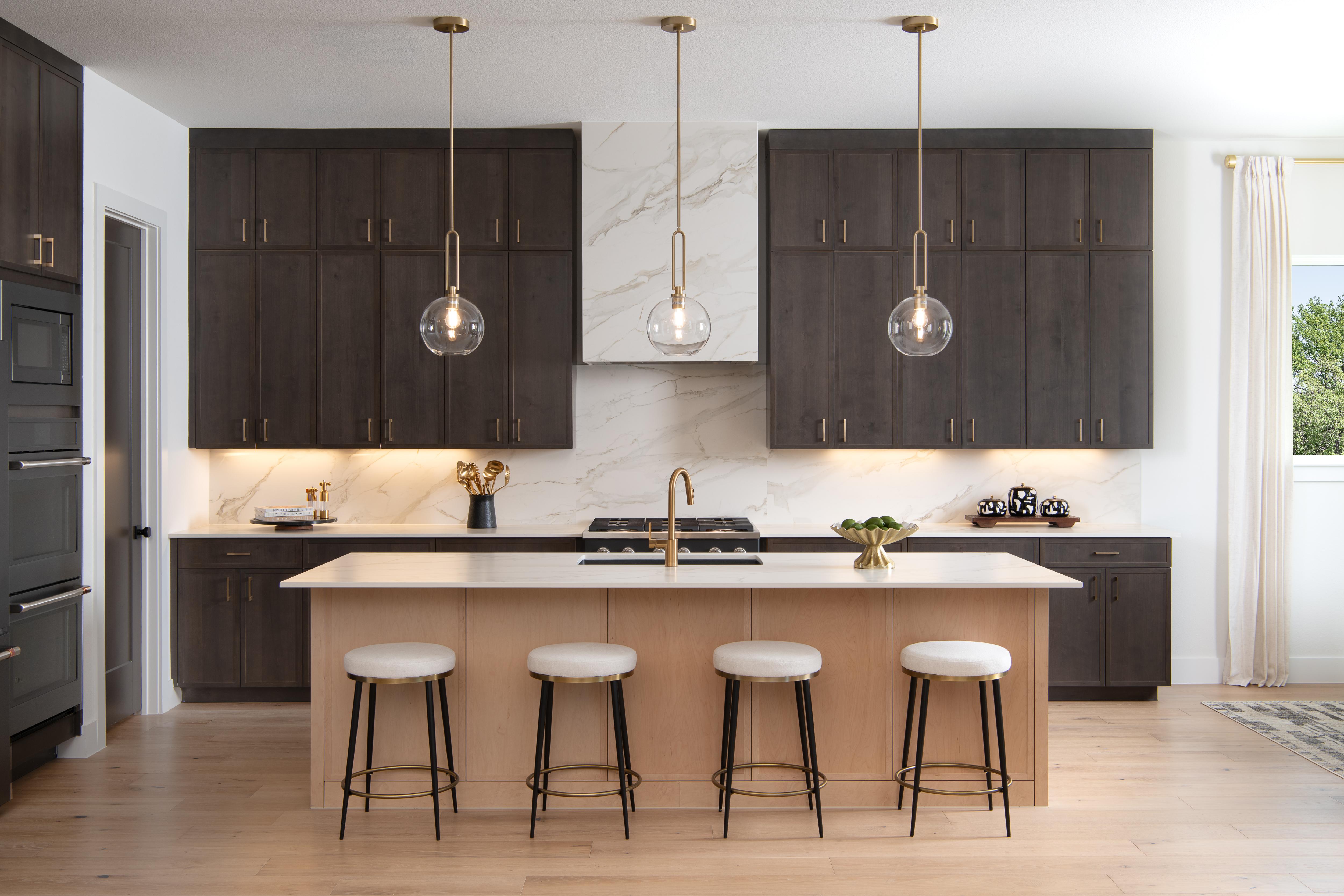
    Fully open floor plans are losing ground to kitchens with defined zones, according to the National Kitchen & Bath Association’s 2027 Kitchen Trends Report. The survey of 830 designers, manufacturers, remodelers, architects and other industry professionals in the U.S. and Canada identifies ten top kitchen design trends, including emerging, enduring and fading styles. It also covers product categories from islands and cabinetry to countertops and appliances.

    Expanded pantries, cabinetry and back kitchens are helping create more organized spaces, NKBA says. Flexible transitions between open and enclosed areas let kitchens adapt as household needs change.

    Attached mudrooms top the list of functional features professionals expect to be most popular over the next three years, at 94%. Flexible spaces for home offices and kids’ study areas follow at 49%, and secure areas to leave deliveries at 37%. Among lifestyle features, 90% cited dedicated beverage areas, and pet feeding stations (64%) and eat-in kitchens (63%) were also among the most cited.

    As more homeowners choose to renovate rather than move, NKBA says, lasting quality is taking priority over short-lived trends. Bill Darcy, NKBA’s global president and CEO, said homeowners are reimagining what their kitchens can do to make everyday life easier, healthier and more enjoyable.

    Read Full Article

  • Architecture firms generate $121.7 billion as AI adoption accelerates

    Architecture firms generate $121.7 billion as AI adoption accelerates

    U.S. architecture is a $121.7 billion business. That’s how much firms generated in gross billings in 2025, according to “The Business of Architecture 2026,” a new report from the American Institute of Architects. New construction accounted for 54% of firm revenue, and the findings draw on data from nearly 900 firms.

    Artificial intelligence has become part of the daily routine at most of them. AIA reports that 74% of firms use AI in day-to-day operations, with adoption reaching firms of all sizes. More firms are also developing formal AI strategies and workflows.

    The report puts numbers on how firms are performing, too. Firms averaged $152,000 in net billings per employee in 2025. Billings and profitability grew, though financial performance varied significantly by firm size. The mix of work is changing as well, with shifts across institutional, commercial, residential and data center projects.

    Beyond the balance sheet, the report documents gains in workforce diversity, with increases in both architecture staff and firm leaders who are women or members of racially and ethnically diverse groups. Firms are weaving resilience, climate adaptation and sustainability measures more deeply into project delivery. They are also paying closer attention to business continuity and succession planning, including ownership transition plans and written business plans.

    Read Full Article